
All apps · 0 apps

simstudio-realtime
Docker app from rorar's Repository
Overview
Readme
View on GitHub





A workspace to build, deploy and manage AI agents and workflows.
Quickstart
Cloud-hosted: sim.ai

Self-hosted
npx sim-setup
Desktop: macOS

macOS 12+, Apple Silicon and Intel. See the desktop docs to point it at a self-hosted deployment.
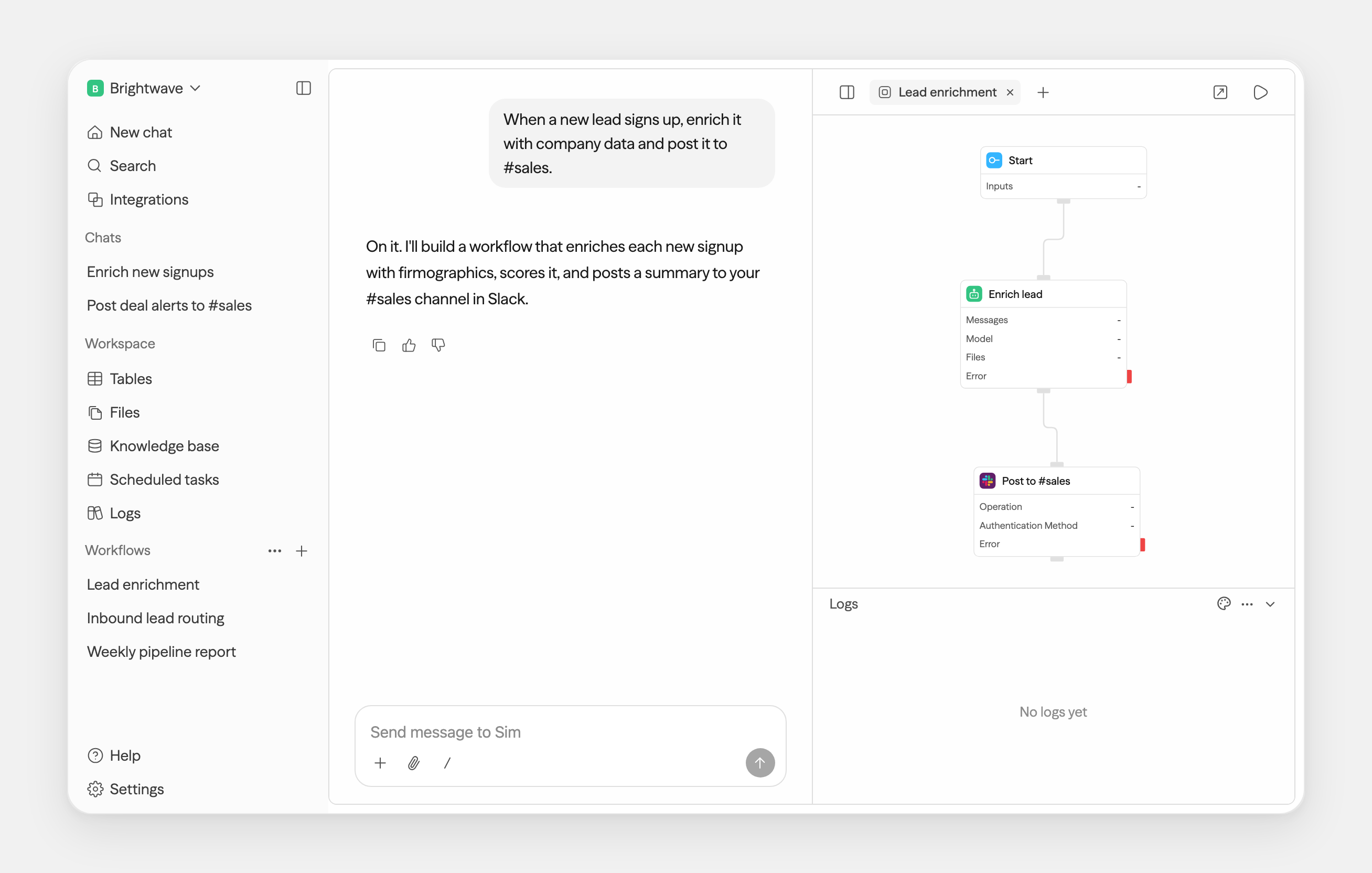
Capabilities
- Connect 270+ integrations (5,400+ actions, 520+ triggers) and every major LLM
- Add Slack, Notion, HubSpot, Salesforce, databases, and more
- Build agents visually, conversationally, or with code
- Ingest files, knowledge bases, and structured table data
- Monitor runs, logs, schedules, and workflow activity
One workspace, every surface
Chat and workflows are just the start — tables, files, and knowledge all live in the same workspace, in the browser or on your desktop.
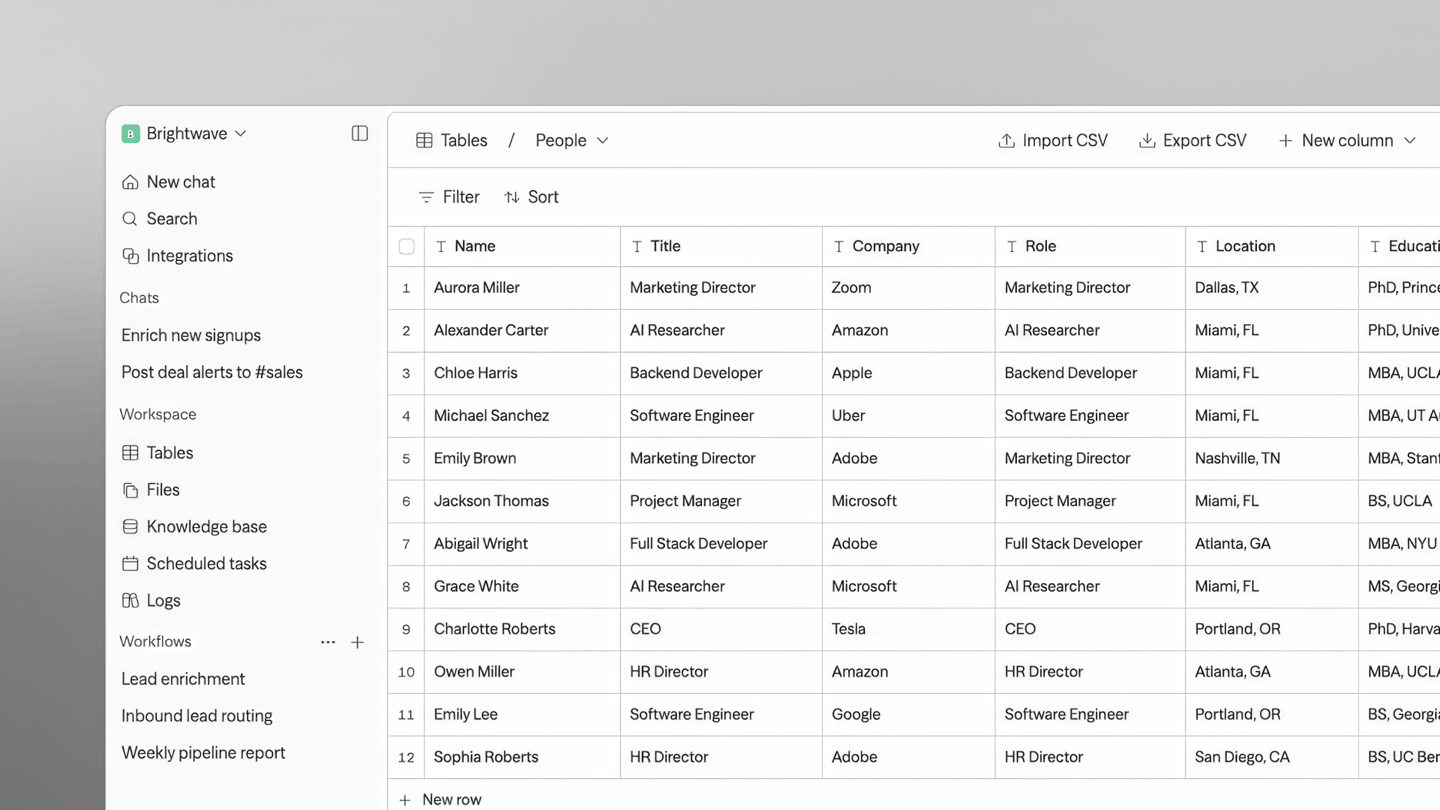
Tables — a database, built in |
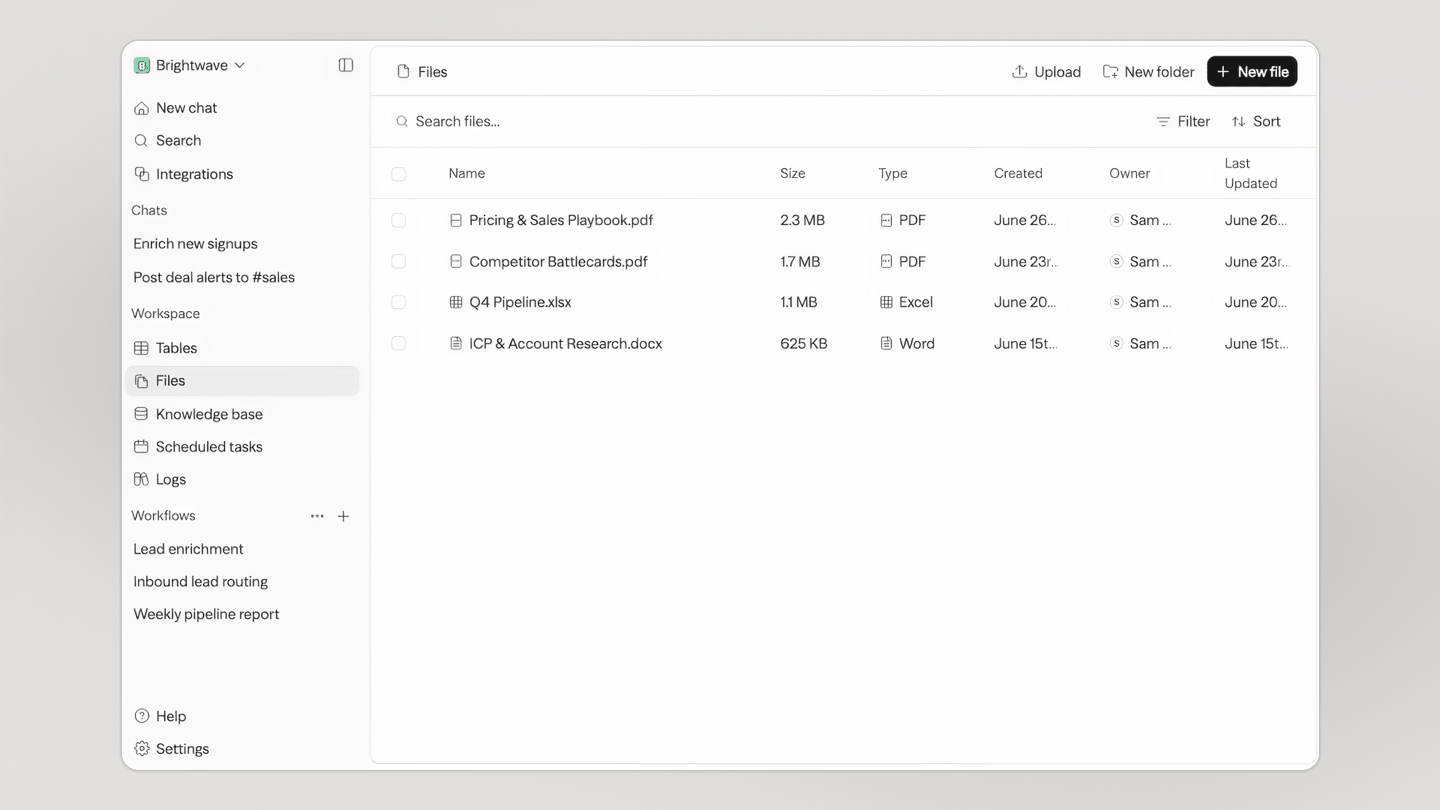
Files — one store for your team and every agent |
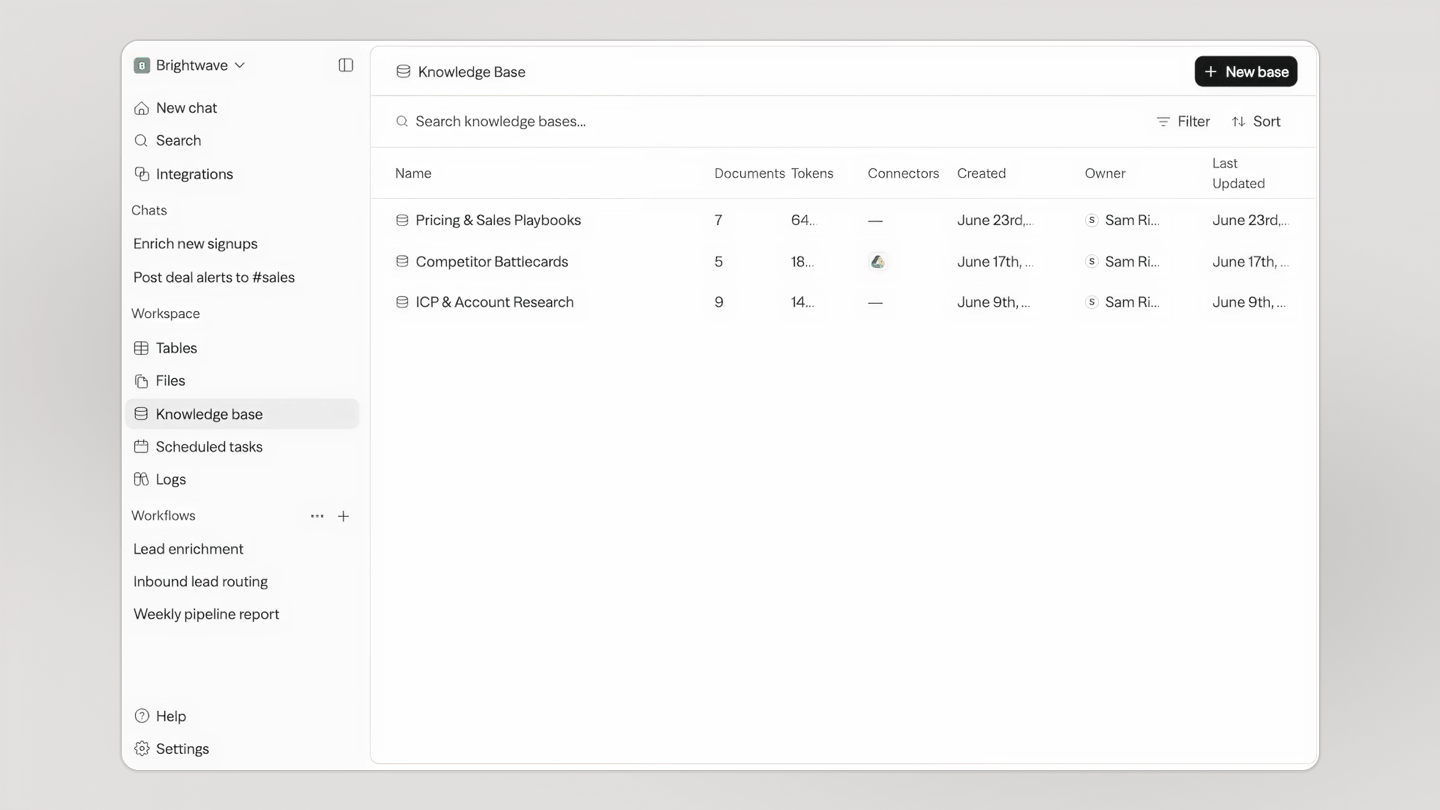
Knowledge — your agents' memory |
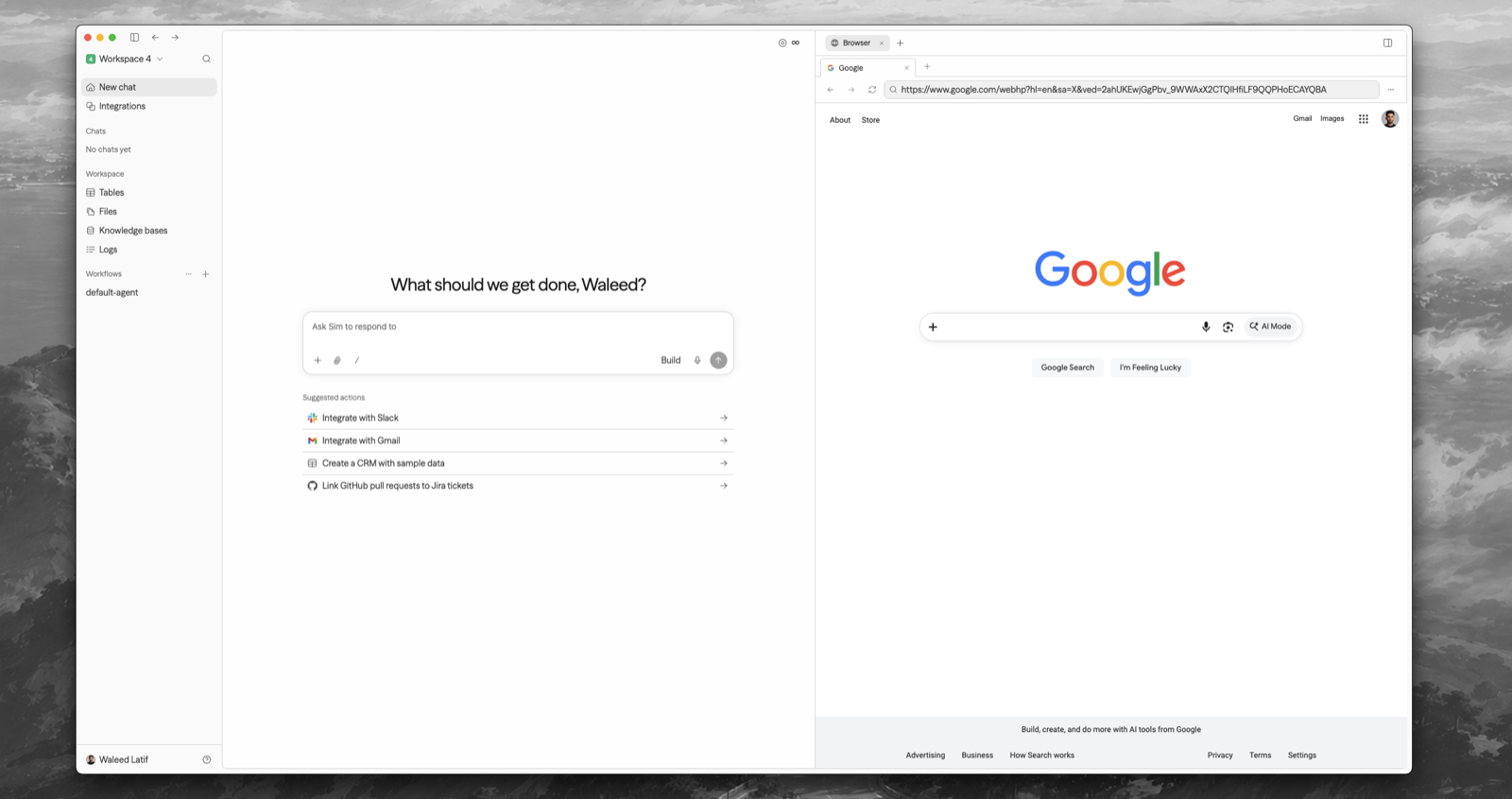
Desktop — Sim on your Mac, browser and terminal included |
Self-hosting
Requirements: Node.js 20+ and Docker.
npx sim-setup is an interactive wizard that creates a small sim/ deployment directory, provisions the database, generates secrets, writes .env, connects a Chat API key, and starts the published Sim images with Docker Compose. It does not clone the repository.
When it finishes, open http://localhost:3000.
Inside a cloned Sim repository, run bun run sim-setup to unlock the source-only local development and Kubernetes modes.
Reconfigure an optional capability without rerunning the full wizard:
npx sim-setup config
npx sim-setup add email
npx sim-setup add storage
npx sim-setup add sandbox
npx sim-setup add jobs
npx sim-setup add cache
npx sim-setup add knowledge
npx sim-setup add chat
npx sim-setup add llm
npx sim-setup add integration slack
npx sim-setup config detects the effective local-dev, Docker Compose, or current-context
Helm configuration and reports configured, missing, or invalid capabilities and OAuth
integrations without printing credential values. This is separate from npx sim-setup status,
which reports whether installed services are running and healthy.
Manage your install from its directory:
npx sim-setup start | stop | restart   # bring your install up / down / cycle
npx sim-setup update                   # pull and apply Compose images
npx sim-setup status                   # what's installed and healthy
npx sim-setup logs                     # follow logs
npx sim-setup doctor                   # diagnose configuration problems
npx sim-setup down                     # remove containers (data kept)
npx sim-setup reset                    # archive .env and wipe managed data
The setup package detects how you're running and acts accordingly. Use --dir <path> to create or manage a deployment somewhere other than ./sim.
Sim also supports local models via Ollama and vLLM. See the self-hosting docs for details.
Chat API Keys
Chat is a Sim-managed service. npx sim-setup connects a Chat API key for you — sign in when it opens your browser and the key is stored automatically. To view, create, or revoke keys later, go to sim.ai/selfhost/settings/chat-keys.
Environment Variables
See the environment variables reference for the full list, or apps/sim/.env.example for defaults.
Tech Stack
Next.js · Bun · PostgreSQL · Drizzle · Better Auth · Tailwind — and the rest of the stack
- Framework: Next.js (App Router)
- Runtime: Bun
- Database: PostgreSQL with Drizzle ORM
- Authentication: Better Auth
- Schema Validation: Zod
- UI: Shadcn, Tailwind CSS
- Streaming Markdown: Streamdown
- State Management: Zustand, TanStack Query
- Flow Editor: ReactFlow
- Docs: Fumadocs
- Monorepo: Turborepo
- Realtime: Socket.io
- Background Jobs: Trigger.dev
- Remote Code Execution: E2B
- Isolated Code Execution: isolated-vm
Contributing
We welcome contributions! Please see our Contributing Guide for details.
License
This project is licensed under the Apache License 2.0 - see the LICENSE file for details.

Requirements
Requires simstudio-db on the same Docker network (simstudio_internal). Requires simstudio-valkey for session persistence and scaling.
IMPORTANT: Before adding this container, you must create the Docker network 'simstudio_internal' first. Follow these steps in Unraid:
- Open Terminal (Go to Main, click Terminal button)
- Run: docker network create simstudio_internal
- Go to Settings > Docker
- Set "Enable Docker" to "No" and click Apply
- Set "Preserve user defined networks" to "Yes" and click Apply
- Set "Enable Docker" to "Yes" and click Apply
- The network is now ready for use with all Sim Studio containers
Categories
Related apps
Explore more like this
Explore allDetails
ghcr.io/simstudioai/realtime:latestRuntime arguments
- Web UI
http://[IP]:[PORT:3002]/health- Network
simstudio_internal- Shell
sh- Privileged
- false
- Extra Params
--health-cmd="curl -fsS http://127.0.0.1:3002/health" --health-interval=90s --health-retries=3 --health-start-period=10s --health-timeout=5s
Template configuration
Realtime WebSocket server port
- Target
- 3002
- Default
- 3002
- Value
- 3002
PostgreSQL connection settings. Must match simstudio-db configuration.
PostgreSQL connection URL (format: postgresql://user:password@host:port/database)
- Default
- postgresql://postgres:postgres@simstudio-db:5432/simstudio
- Value
- postgresql://postgres:postgres@simstudio-db:5432/simstudio
Auth and security configuration for realtime service.
Authentication secret key (shared with simstudio-app). Must be 32+ characters. Generate: openssl rand -base64 32
Base URL for authentication (e.g. http://your-server:3000)
- Default
- http://localhost:3000
- Value
- http://localhost:3000
Secret for internal service-to-service communication (shared with simstudio-app). Generate: openssl rand -base64 32
Public URLs for the application.
Public URL of the application (used by browser clients)
- Default
- http://localhost:3000
- Value
- http://localhost:3000
Valkey connection for session persistence and scaling.
Valkey connection URL (format: redis://host:port/db)
- Default
- redis://simstudio-valkey:6379/0
- Value
- redis://simstudio-valkey:6379/0
Node.js and timezone configuration.
Node.js environment (production/development)
- Default
- production
- Value
- production
Timezone. See: https://en.wikipedia.org/wiki/List_of_tz_database_time_zones#List
- Target
- TZ
- Default
- Europe/Berlin
- Value
- Europe/Berlin
Advanced performance and debugging settings.
Log verbosity: error, warn, info, debug
- Default
- info
- Value
- info