
All apps · 0 apps

Rickroll
Docker app from CorneliousJD's Repository
Overview
Readme
View on GitHubSelf Hosted, self contained Rickroll container.








More info can be found here.
This is a self-hosted Rickroll container. Point someone at it - a link, a QR code, whatever your heart desires - and they get properly rickrolled: full video and audio of Rick Astley. The video starts playing the instant the page loads; sound kicks in the moment they click anything at all, no matter what it is.
Image is based on nginxinc/nginx-unprivileged, runs as a non-root user, and everything needed to serve the video is baked into the image at build time - no external dependencies at runtime.
Quick start
docker run -d -p 8080:8080 --name rickroll modem7/docker-rickroll
Then visit http://localhost:8080 - see the Configuration example below for a docker-compose version.
Also published to GHCR if you'd rather pull from there: ghcr.io/modem7/docker-rickroll.
How it works
- Every browser autoplays a muted video with zero restrictions, but every browser also actively refuses to let a page play sound without a genuine click/tap/keypress first - there's no trick or workaround for this, it's a deliberately and increasingly strictly enforced policy (the same reason YouTube and every other site with audio needs a click too). So the video autoplays muted immediately, and a decoy page state - a stuck-loading spinner or a fake "Something went wrong" site error, picked at random - entices that first click, which is all it takes to unmute. A fake cookie-consent banner sits on top of either one, since that's realistic regardless of what the rest of the page is doing.
- The video keeps loading/playing muted in the background the whole time so it's instantly ready, but it's completely covered by the decoy until the reveal - nothing looks suspicious, and nothing gives it away early.
- Only genuine clicks/taps/keypresses count for this - deliberately not mouse movement or scrolling, since browsers don't count those as real interaction either, and unmuting off one of those just gets the video paused by the browser's autoplay enforcement instead of actually unmuted.
- The video defaults to
object-fit: cover(fills the whole screen), but on a narrow/portrait viewport - basically any phone - that crops a 16:9 video down to a heavily zoomed-in sliver. Below a 1:1 aspect ratio it automatically switches tocontain(letterboxed, but the whole frame is visible) instead, regardless of theOBJECT_FITsetting, since cover never looks right there. Desktop/landscape is untouched. - The video is served through nginx's mp4 module, so seeking/scrubbing and byte-range requests work properly and responses are cached.
- The video isn't stored in git. It's fetched from a GitHub Release asset at build time and baked into the image, so the shipped container is still fully self-contained and works offline - git just doesn't carry the binary around.
- Built for both linux/amd64 and linux/arm64/v8.
The decoy screens
These are the two decoy states mentioned above - one is shown at random on every visit, with the cookie banner on top of either one. Clicking or pressing a key anywhere unmutes and reveals the video.
| Loading | Error |
|---|---|
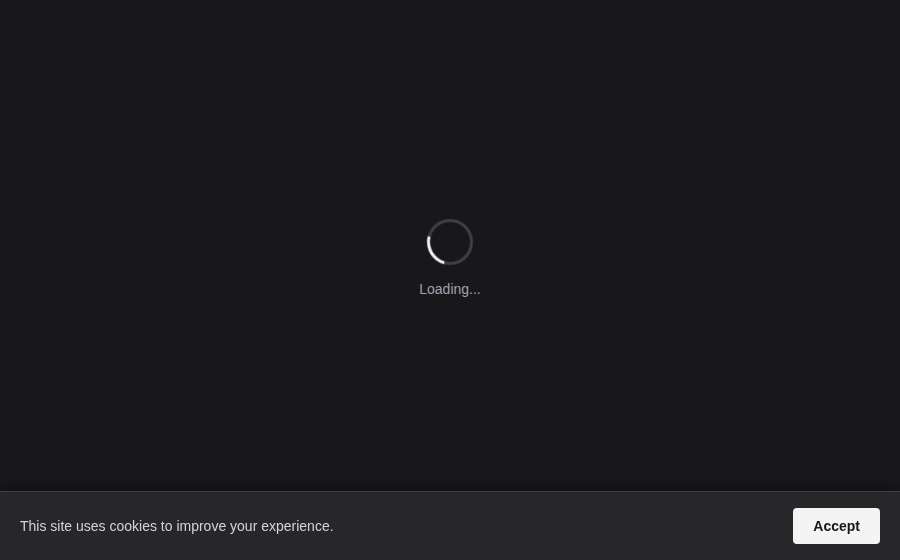 |
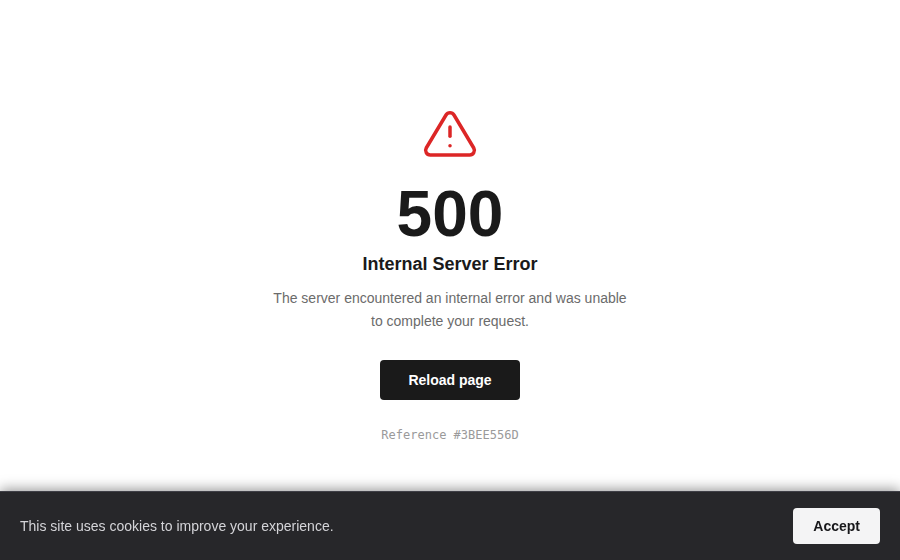 |
These exist because of browser autoplay restrictions: browsers won't let a page play sound until there's been a genuine click/tap/keypress, so the video sits ready and muted in the background while one of these two screens is shown to fish for that first interaction. They're intentionally styled to look mundane or broken rather than like an obvious "click to play" button, since the whole point of the rickroll is the reveal catching you off guard. See #146 for a real report of this being mistaken for a compromise.
Container Screenshot

Tags
| Tag | Description |
|---|---|
| 480p | Video starts automatically. 854x480. |
| 720p | Video starts automatically. 1280x720. |
| latest / 1080p | Video starts automatically. 1920x1080 - latest and 1080p are the same image. |
| 2160p | Video starts automatically. 3840x2160. |
All tags are built from the same image - only the baked-in video resolution differs.
Environment Variables
| Variable | Description | Default |
|---|---|---|
| PORT | Changes the port nginx is listening on. | 8080 |
| OVERLAY | Which page state(s) can entice the first click - a comma-separated list from error, loading, one is picked at random per visit. Set to a single value to always use just that one. A cookie-consent banner always shows on top regardless. |
both |
| TITLE | Browser tab title shown once the video is revealed (after the first click/keypress/etc). | Rickroll |
| PRE_TITLE | Browser tab title shown before the video is revealed. | Loading... |
| HEADLINE | Optional heading rendered over the revealed video (e.g. a caption). Leave unset to omit it. | (none) |
| HEIGHT | CSS height of the video element. | 100vh |
| WIDTH | CSS width of the video element. | 100% |
| OBJECT_FIT | CSS object-fit value for the video (cover, contain, etc). |
cover |
| LOOP | Whether the video loops (true/false). |
true |
| VIDEO_FILE | Filename of the video to serve, relative to the web root. A full URL (https://...) is also accepted and used as-is. |
video.mp4 |
Configuration example
services:

  rickroll:
    image: modem7/docker-rickroll
    container_name: Rickroll
    ports:
      - 8080:8080
Build Arguments
The video is fetched pre-transcoded from a video asset attached to a GitHub Release at build time, rather than being stored in git. This only matters if you're building the image yourself - the published latest tag already has it baked in.
| Build Arg | Description | Default |
|---|---|---|
| VIDEO_URL | URL the build downloads the (already-transcoded) video from. | video-assets-v1/video-1080p.mp4 |
# build the default (1080p, matches the published `latest` tag)
docker build -t rickroll:1080p .

# point it at a different resolution asset instead
docker build --build-arg VIDEO_URL=https://github.com/modem7/docker-rickroll/releases/download/video-assets-v1/video-720p.mp4 -t rickroll:720p .
Transcoding (4K master -> 2160p/1080p/720p/480p mp4s) happens separately, via a manually-triggered GitHub Actions workflow that runs against the master video and uploads the results back to the Release. It only needs to run when the master video changes, not on every build.
Categories
Download Statistics
Total Downloads Over Time
Related apps
Explore more like this
Explore allDetails
modem7/docker-rickrollRuntime arguments
- Web UI
http://[IP]:[PORT:8080]- Network
bridge- Shell
sh- Privileged
- false
Template configuration
Container Port: 8080
- Target
- 8080
- Default
- 7344
- Value
- 7344