
All apps · 0 apps

Home-Information
Docker app from Selfhosters
Overview
Home Information transforms how you manage your property by creating a visual, spatial, centralized hub for everything about your home. Instead of hunting through drawers, email attachments, and scattered notes, you'll have manuals, maintenance records, device controls, and security monitoring all organized exactly where they belong - visually positioned on a map of your home.
Key Features:
- Spatial organization by location (click on kitchen to see everything kitchen-related)
- Document and information management (manuals, warranties, maintenance records)
- Home Assistant integration for device control
- ZoneMinder integration for security cameras
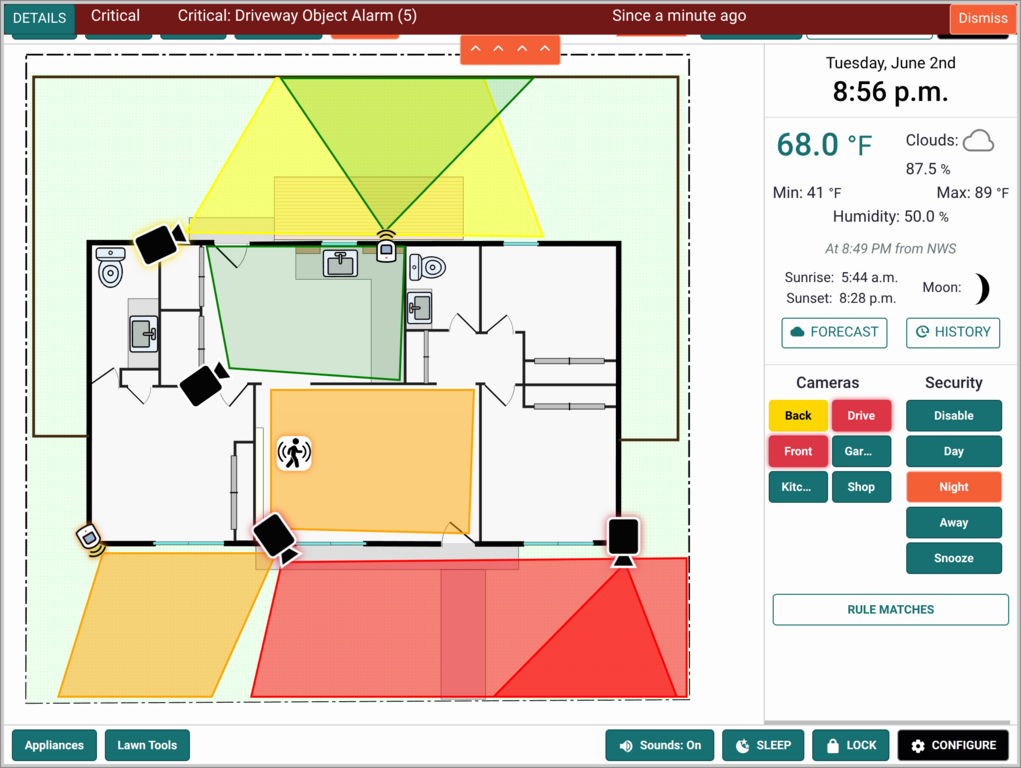
- Visual security zone monitoring
- Local-first architecture (your data stays on your network)
Perfect for homeowners who want to stay organized and maintain their property effectively, especially those with home automation or security systems.
Readme
View on GitHub
Home Information
Finally, a single place for all your home's information.
Home Information transforms how you manage your property by creating a visual, spatial, centralized hub for everything about your home. Instead of hunting through drawers, email attachments, and scattered notes, you'll have manuals, maintenance records, device controls, and security monitoring all organized exactly where they belong - visually positioned on a map of your home.
https://github.com/user-attachments/assets/e3d21511-f874-4d64-b089-c4751fc0de57
Why Home Information?
The Problem: Home automation and security systems give you device control, but they don't help you organize the information that makes your home truly manageable. Where did you put the HVAC manual? When was the water heater last serviced? Which camera covers the back door?
Our Solution: A spatial, visual approach to home information management that mirrors how you actually think about your home - by location and context, not by device type or vendor.
Perfect for:
- Homeowners who want to stay organized and maintain their property effectively
- Tech-savvy households ready to move beyond scattered digital notes and files
- People with integrated homes using security systems, home automation, or smart devices
See Why Home Information? for more details on our approach.
Quick Start
Requirements: Docker installed and running.
Get running in only minutes:
curl -fsSL https://raw.githubusercontent.com/cassandra/home-information/master/install.sh | bash
Then visit: http://localhost:9411
The install script automatically handles everything: Docker setup verification, secure credential generation, and application startup.
New to the interface? Follow the Getting Started Guide for a walkthrough.
Need more control? See the Installation Guide and Deployment Options for more options.
What You Can Do
Information Management:
- Upload and organize manuals, warranties, and documents by location
- Store notes and specifications for every item in your home
- Track maintenance histories and repair records
- Link to information stored in other apps like Paperless-ngx, HomeBox and Immich
Visual Organization:
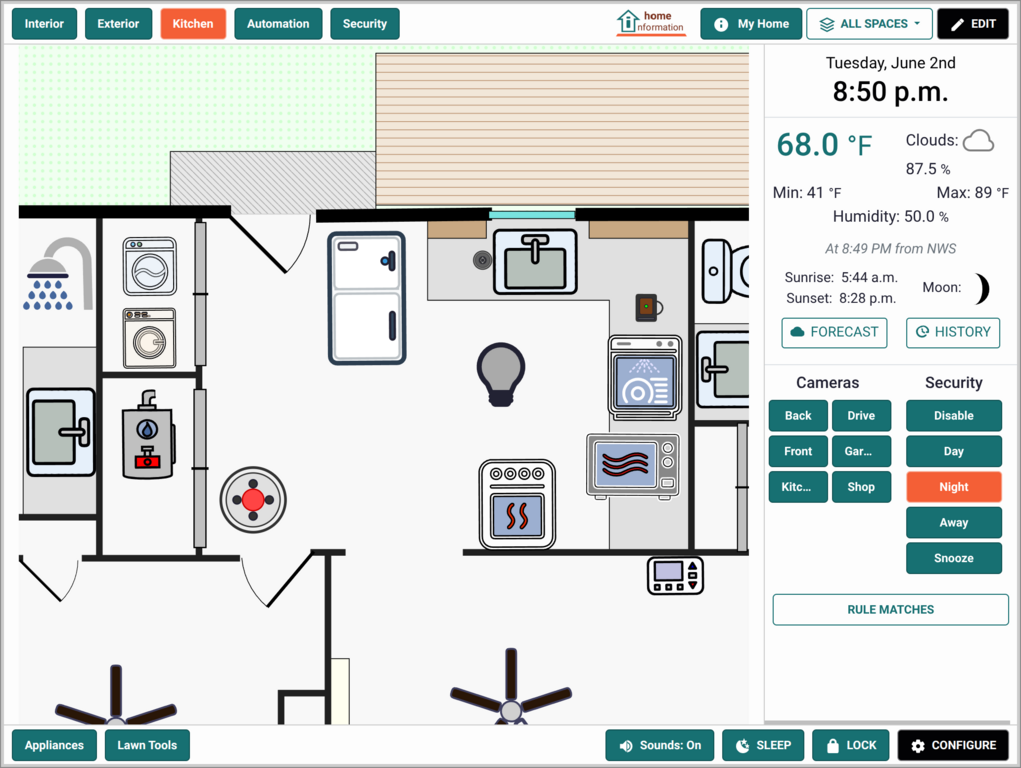
- Position items exactly where they belong on floor plans or property maps
- Create multiple views (whole house, kitchen only, security zones, etc.)
- Customize the floor plan to match your home and property
Home Automation Integration:
- Control lights, switches, and devices through Home Assistant
- Monitor device states and histories
- Set up automated alerting rules
Security & Monitoring:
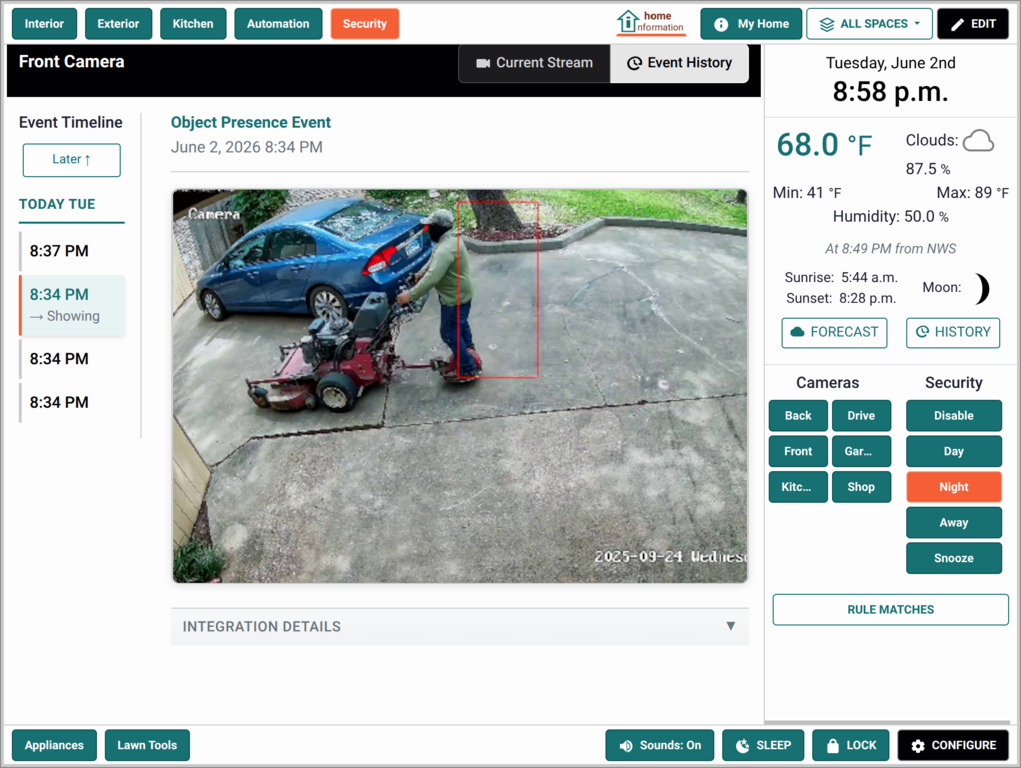
- Integrate with Frigate or ZoneMinder for camera management
- Visual security zone monitoring with color-coded status
- Email alerts and customizable alarm sounds
- Browse video event histories
See the complete Features List for details.
Screenshots
Project Status
Ready for Early Adopters - All core features are implemented and functional. We're looking for users who want to help refine the experience and identify areas for improvement.
What's Working:
- Full information management and visual organization
- Floor plan editor
- Home Assistant, Frigate, Paperless-ngx, HomeBox, Immich and ZoneMinder integrations
- Security modes, monitoring and alerts
- Multi-location and multi-view support
What's Evolving:
- UI polish in some areas (fully functional, but could be prettier)
- Additional integrations based on user demand
- Mobile experience optimization
Contributing
We welcome all types of contributions:
Users: Try the app and share your experience - what works, what doesn't, what's missing
Developers: Help improve the codebase. Built with Django, JavaScript, and Bootstrap. See Development.
Designers: Help us improve the user experience and visual design. We'd love your input on making this more intuitive and beautiful.
Home Automation Experts: Help us understand what integrations would be most valuable.
See Contributing Guidelines for details.
Architecture & Security
- Local-first: Your data stays on your network. No cloud services required.
- Integration-friendly: Designed to work with existing home automation and security systems
- Docker-based: Consistent deployment across platforms
- Django backend: Mature, secure web framework
- SQLite storage: Simple, reliable data management
For technical details, see our Development Documentation.
Resources
Users
- Installation - Setup, day-to-day management, updates, troubleshooting
- Features - Complete feature overview
- Getting Started - First-time user walkthrough
- Layout Editor - Show how to use the layout editor
- Integrations - Home Assistant, Frigate, Paperless-ngx, Immich, HomeBox and ZoneMinder setup
- Deployment Options - Network access, custom compose stacks, production configuration
- FAQ - Common questions and answers
Contributors
- Contributing - How to get involved
- Development - Technical setup and guidelines
- Code of Conduct - Community standards
- Security - Security policy and reporting
Project
Categories
Related apps
Explore more like this
Explore allDetails
ghcr.io/cassandra/home-information:latestRuntime arguments
- Web UI
http://[IP]:[PORT:8000]- Network
bridge- Shell
bash- Privileged
- false
Template configuration
Port for the Web UI
- Target
- 8000
- Default
- 9411
Directory where the SQLite database is stored
- Target
- /data/database
- Default
- /mnt/user/appdata/home-information/database
Directory where uploaded files (manuals, images, etc.) are stored
- Target
- /data/media
- Default
- /mnt/user/appdata/home-information/media
Directory containing environment configuration files (optional)
- Target
- /env
- Default
- /mnt/user/appdata/home-information/env
Django secret key - Set to a random string for security
- Target
- DJANGO_SECRET_KEY
Email address for the admin user
- Target
- DJANGO_SUPERUSER_EMAIL
- Default
- admin@example.com
Password for the admin user
- Target
- DJANGO_SUPERUSER_PASSWORD
Django settings module (do not change unless you know what you're doing)
- Target
- DJANGO_SETTINGS_MODULE
- Default
- hi.settings.local
Database path inside container (do not change)
- Target
- HI_DB_PATH
- Default
- /data/database
Media path inside container (do not change)
- Target
- HI_MEDIA_PATH
- Default
- /data/media
Skip login screen for local network use (set to false for multi-user setup)
- Target
- HI_SUPPRESS_AUTHENTICATION
- Default
- true|false
Redis hostname (use 127.0.0.1 for internal Redis)
- Target
- HI_REDIS_HOST
- Default
- 127.0.0.1
Redis port
- Target
- HI_REDIS_PORT
- Default
- 6379
Prefix for Redis keys (leave empty unless running multiple instances)
- Target
- HI_REDIS_KEY_PREFIX
Additional URLs (ALLOWED_HOSTS) for network access (e.g., http://192.168.1.100:9411 http://nas.local:9411)
- Target
- HI_EXTRA_HOST_URLS
Additional URLs for Content Security Policy (usually same as Extra Host URLs)
- Target
- HI_EXTRA_CSP_URLS
Prefix for email subjects (e.g., [Home Info])
- Target
- HI_EMAIL_SUBJECT_PREFIX
Default sender email address
- Target
- HI_DEFAULT_FROM_EMAIL
Email address for server error messages
- Target
- HI_SERVER_EMAIL
SMTP server hostname (e.g., smtp.gmail.com)
- Target
- HI_EMAIL_HOST
SMTP server port (587 for TLS, 465 for SSL, 25 for unencrypted)
- Target
- HI_EMAIL_PORT
- Default
- 587
SMTP username/email for authentication
- Target
- HI_EMAIL_HOST_USER
SMTP password for authentication
- Target
- HI_EMAIL_HOST_PASSWORD
Use TLS for email (typically with port 587)
- Target
- HI_EMAIL_USE_TLS
- Default
- false
Use SSL for email (typically with port 465)
- Target
- HI_EMAIL_USE_SSL
- Default
- false